Global Justice for Greyhounds and All Dogs condemns North Korean state promotion of dog meat
“Cruelty is not culture”
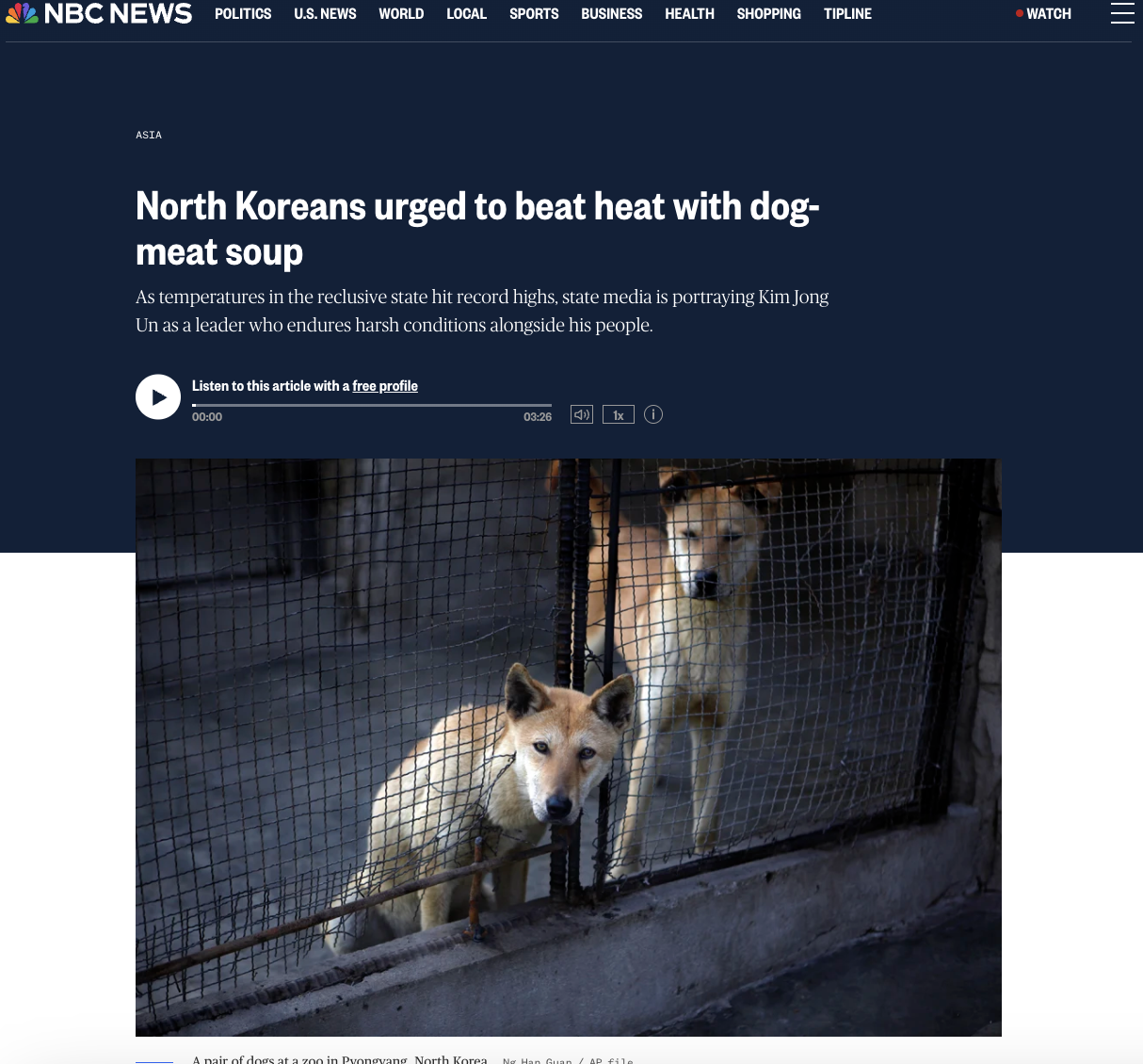
Global Justice for Greyhounds and All Dogs has condemned North Korean state media coverage promoting dog meat soup as a remedy for record-breaking heat — a claim with no scientific basis, which puts human lives at risk and drives a trade in which dogs and cats are killed brutally and barbarically.As North Korean state television reported a record 36.7°C, a ruling party newspaper listed dog meat soup among recommended “nutritious foods.”“Telling people in a lethal heatwave that hot meat stew will cool them down is not folklore, it is misinformation — and it is being used to justify the killing of dogs and cats,” said Global Justice for greyhounds and all dogs “Cruelty is not culture. Tradition is not a defence, and age is not evidence.”This is not only a false claim. It is barbaric and cruel.
There is no evidence that dog meat improves heat tolerance this is propaganda that killing dogs and cats is a health benefit, which is clearly isn’t.
The World Health Organization (WHO) and international health groups warn that the unregulated trade, mass transport, and slaughter of dogs and cats for human consumption create serious public health hazards. The trade spreads dangerous zoonotic pathogens, including the fatal rabies virus, trichinellosis, and cholera"One Health" agreement at the World Health Assembly 78 also emphasised the importance and crucial link between human and animal health and the need to stop exploitation consumption and killing of Animals and treat them with care and compassion.Focusing on eating plant based food for increased good health and the safety of global public health.The killing of dogs and cats is barbaric .
Across the region, investigators have documented dogs beaten, hanged, electrocuted or put into boiling water while conscious, and cats drowned, beaten, boiled alive or electrocuted before skinning. Many are stolen pets and strays, snared or poisoned, then transported for days without food or water.
North Korea has no animal welfare or animals protetction laws which means there is zero protection and legislation for dogs cats and animals.
We call for:
1. A ban on the dog and cat meat trade, ending the breeding, capture, transport, slaughter and sale of dogs and cats for human consumption.
2. Retraction of the health claim, and reporting that states plainly it is unsupported rather than presenting it as tradition.
3. Recognition of the zoonotic risk by regional health authorities, with the dog and cat meat trade brought into rabies control and elimination planning.
Together, We stand Globally United Against Animal cruelty and Disease and uphold global standards of health, compassion, humanity, and ethical responsibilityFor further information on the campaign and projects please visit